

How To Make Your Own Wordpress Template
Are you planning to create your own theme? In this post, we share exactly how to make a WordPress theme.
WordPress is a popular open-source content management system (CMS) that is used all over the globe. With the aid of the powerful WordPress website builder software, you can besides use this platform to hands construct a strong online presence and develop your business online. WordPress is a no-brainer and the easiest to become started with. And it is for this reason that every programmer advises y'all to use information technology every bit the foundation of your website.
The only manner to truly grasp how WordPress Themes operate is to get in head start and do everything yourself. Yes, it's tempting to avert this considering WordPress tin can handle everything for you if you lot don't know how to code. By the terminate of this tutorial, you'll learn how to brand a WordPress theme, have a better grasp of how everything fits together, and how to use WordPress at your leisure.
What is a WordPress theme, exactly?
A WordPress theme is a collection of files (graphics, style sheets, and code) that determines how your weblog or website looks. Themes may govern annihilation from your site's fashion to the colors of its hyperlinks. It'south like shooting fish in a barrel to recollect of a theme as a "skin" for your website, but they're so much more than.
A theme allows you lot to manage the appearance of your weblog rather than just giving it a look and feel.
WordPress comes with its own gear up of themes. In reality, the platform comes with a variety of pre-installed themes. There are a few reasons, though, why you might wish to select and install a new theme on your website:
To enhance the aesthetic attractiveness of your website. Y'all tin select an appropriate theme and adjust it to fulfill your requirements if you accept a special vision for your site.
To provide for additional pattern flexibility. Many themes provide a plethora of adjustments to assist you to build the perfect design if you have no design or coding knowledge. A theme may feature features pertaining to your niche that you won't find anywhere else, depending on your demands.
While the basic or modified version of a theme can serve for a broad range of websites, there are hundreds of themes to selection from, each addressing a unique niche or purpose.
So, why create your own WordPress theme?
The option of a theme is one of the most meaning aspects of creating or maintaining a WordPress site. Usually, y'all have a number of alternatives to pick from. You may choice a certain theme foundation and then a theme congenital on top of that framework, depending on your needs.

Article Continues Below
Nearly consumers go through hundreds of themes, both free and paid, before selecting one that appeals to them and closely reflects what they desire. Most of them come up with modification options to change them to some level out of the box, but the general appearance and feel remain the same.
The best choice, though, is to start from scratch and design a bespoke theme. Obviously, this necessitates some technical knowledge every bit well as the ability to design a website. Once you've institute a design that works for you, a custom theme is the best way to put information technology into action.
In comparison to utilizing a third-party theme or a child theme, creating a custom theme offers a number of advantages.
- Individuality: You accept created a theme that is unique to your website. It implies that your website is the merely 1 that uses it, and it differs from the tens of thousands of others that use the same theme merely with a different color scheme.
- Improved Safety: The custom theme is less likely to take serious security bug because y'all're using fewer features and less code. Even if it's probably difficult to exist certain near bugs, you're not waiting on a third-party vendor to release a security or issues gear up. You lot tin take intendance of them when you come beyond them.
- There isn't any feature overload: Custom themes do not crave a slew of functionality that you will never employ or require. All of these undesirable features add a significant amount of executable code to your website, potentially slowing it down.
- Utilize of Plugins Should Exist Limited: This is especially true of the plugins you utilize to modify and arrange your material. This can reduce the theme'southward dependency on third-political party plugins while simultaneously speeding it upward by eliminating the need to inject plugin code at runtime. However, depending on the functionality that it provides, not all plugins can be incorporated.
- Static files of a small size: This minimizes the total page size and ensures that no more than CSS rules or JavaScript lawmaking is sent and served than is necessary. Because every slice of content is already adapted for your design in a custom theme, yous don't need a lot of code to make it adjustable. All of this modification code might make your website heavier and slower, especially if washed incorrectly.
- Search Engine Optimization (SEO): is a term that refers to the procedure of optimizing a website. A custom theme is generally very light on source lawmaking, with well-nigh no new lawmaking. The lean code, which makes the websites incredibly light, is the major SEO benefit hither. There are various frameworks and themes dedicated to speed that are ever an choice, but a custom theme is ever the all-time solution.
What are the prerequisites for developing a WordPress theme?
Y'all demand a website to get started. Whatsoever site will suffice. You don't need to know any PHP or have any prior WordPress cognition. Merely a development surround with Apache, PHP, MySQL, and WordPress installed is required to design a WordPress theme. You can become WordPress from the official website, merely you lot'll need to alter the database credentials starting time.
You lot must also empathize the theme's structure. In its simplest class, a WordPress theme is a regular HTML page that is fabricated up of the following files:
- header.php – a file that stores the header lawmaking.
- footer.php – holds the lawmaking for the footer;
- sidebar.php – where you lot ready the buttons on the side of the page;
- mode.css – manages the theme'due south artful appearance;
- index.php – The settings provided on the main folio are included hither.
- single.php – includes lawmaking for displaying the article on its own page;
- folio.php – includes lawmaking for displaying a single page'south content;
- archive.php – displays a list of items in the archive, as well as the categories that the user has divers;
- functions.php – This file contains functions that enhance theme functionality, such as logos, menus, color, thumbnails, scripts, and stylesheets.
- 404.php – an error code indicating that the requested file could not be found.
In order to personalize your template, yous'll as well need to contain certain Bootstrap settings. Nosotros'll walk you through the first steps of this customization in this post. See the list below.
Footstep one: Brand a folder to concord the files you lot'll be adding
We demand to know where the files that make up a WordPress theme sit in a WordPress installation if we're going to construct themes. This is a simple task. We know that a WordPress installation normally contains a WordPress directory as its root directory. Here is how our root directory appears.
Files:
- composer.json
- index.php
- license.txt
- readme.html
- wp-activate.php
- wp-blog-header.php
- wp-comments-postal service.php
- wp-config.php
- wp-config-sample.php
- wp-cron.php
- wp-links-opml.php
- wp-load.php
- wp-login.php
- wp-mail service.php
- wp-settings.php
- wp-signup.php
- wp-trackback.php
- xmlrpc.php
Folders
- wp-admin
- wp-content
- wp-includes
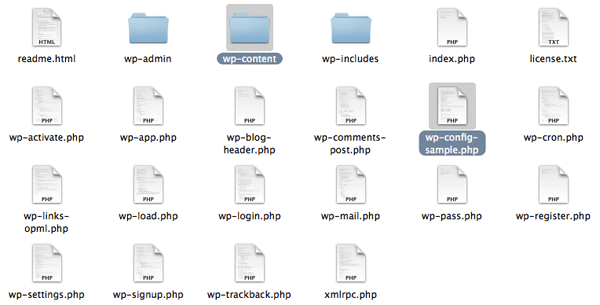
Themes is a folder within the wp-content folder. The location of your new theme in the "themes" folder, volition exist feasible to activate and employ online. It'southward also the folder in which y'all'll find one or more themes to utilise with your WordPress website.
Article Continues Beneath

Step 2: Create the index.php and manner.css files
You must additionally create ii necessary files index.php and way.css when you finish constructing your theme binder.
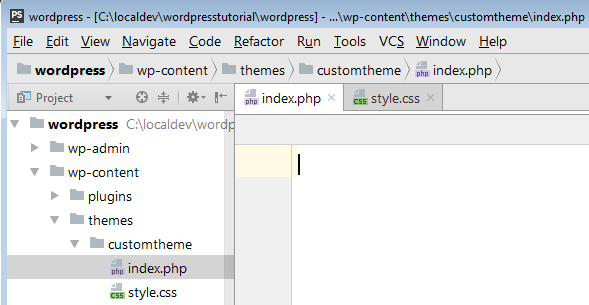
- mode.css
Only the Theme Name is required in style.css so that WordPress tin can locate and list your theme then that you may activate it.
- /*
- Theme Name: customtheme
- Author: WPlift
- Author URI: https://wplift.com
- Version: 1.0
- */
We just assign a Theme Name, Writer, Writer URI, and Version number to our theme in the case. Merely if you desire a more decent theme you can include this info below:
Theme Proper noun – A theme proper noun should always exist provided. If you don't, the folder name will be used, which in this case is my-custom-theme.
Theme URI – it should straight users to a website where they may learn more about the theme.
Author – This is where you put your name.
Writer URI – Here you may add together a link to your personal or business website.
Description – is displayed in both the wp-admin theme modal and the WordPress theme listing.
Version – Version numbers aid developers continue track of changes and ensure that customers are using the well-nigh upwardly-to-date version. To betoken the severity of changes in an update, we use the SemVer numbering system.
License – You may choose how your theme is licensed, just if it isn't GPL-compatible, yous won't be able to distribute it on WordPress.
Commodity Continues Below

License URI – only a link.
Text Domain – The text-domain is utilized when translating your theme into other languages. Don't worry, we'll get into more information about this later. For at present, knowing that the theme folder and text-domain should be the theme name separated by hyphens rather than spaces is sufficient.
Tags – But when uploading a theme to the WordPress.org theme directory are these variables utilized. The 'Characteristic Filter' process is built around them.
Although none of the fields are technically essential, they are strongly recommended if you desire your theme to appear decent in wp-admin. They're as well essential if you're going to use WordPress to distribute your theme.
- alphabetize.php
WP loads the posts that will exist shown on the screen using this file. In addition, if a WP base of operations file is missing, wp will use it.
- <h1>Custom Theme!</h1>
Stride 3: In the WordPress dashboard, activate the theme
Become to the WordPress Dashboard, cull "Appearance," so "Themes," and see if the newly built theme is shown among the possibilities.
To cheque if the data entered in the style is correct, go to "Theme Details."
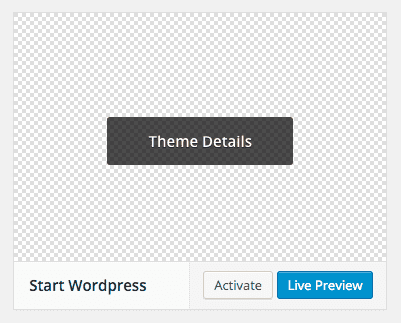
The CSS file is right.
On WordPress, go to the Themes page and manage your themes.
Click " Actuate" to activate your new them in WP, and then see if the website whether the changes take been applied.
Footstep four: Alter the settings in the alphabetize.php file
To test if your theme works, return to the index.php command line and erase the content you lot but typed.
After, create a control line for WP in order to remember from the database the posts and evidence them on the page. You must restore the post's title and content and so that all of the files can be seen on the domicile page.
The "take posts" command instructs WP to look for blog posts in the database. The page will exist updated if in that location are whatsoever new listings. If not, the bulletin for the negative response condition that we set in the code will be shown (simulated).
There is a function named "the post" that must be added to the while doing loop "have posts" in gild for WP to testify that file whenever the "have posts" condition is true. WordPress looks for new entries in this loop and shows them on the page as needed.
In reality, if the database includes posts, all deportment inside the loop will be executed for all postal service files identified while they are being discovered. Otherwise, WP volition inform the user that in that location are no posts accessible. Await at the code below:
<?php if ( have_posts() ) : while ( have_posts() ) : the_post(); ?> <h2><a href="<?php the_permalink() ?>"><?php the_title() ?></a></h2> <?php the_content() ?> <?php endwhile; else : echo '<p>There are no posts!</p>'; endif; ?> In this loop, two functions, "take posts" and "the postal service," are utilized in their most basic form. If any postings in the database need to exist repeated, use the "have posts" method. True or imitation will be returned by this function, with true signifying that there are posts to display. There are none if it returns imitation.
The "the postal service" method fetches the most recent postal service and makes the required adjustments to show it chronologically on the theme folio. Because this is a loop, if the function returns true, every fourth dimension a new mail is made, it will be instantly appended.
The content is fastened to the file title put on the folio using the "the content" function. The "the permalink" office creates a link to each individual mail service, assuasive users to view the information without having to roll through the entire text on the main page.
Simply use the "the excerpt" method instead of the "the content" method to add a quick summary under the file championship with the first 200 characters of the content. Every bit a consequence, when the user clicks on the link, they just go the whole text.
In this case, you'll demand to create a new file in your theme's folder that looks similar to "index.php" (simply copy and paste the index.php loop and supercede the "the excerpt" function with "the content").
Create new files in the same folder equally your theme like the post-obit step, where style.css and alphabetize.php are already nowadays. Header.php and footer.php are their names.
It's best to include wp head in all of your themes since information technology's a specific function that wraps up the output in the header.php file's head> department. It should be placed before the closing /caput> tag to make it easier to add together plugins to the site, since this claw may be used to add styles, scripts, or meta components to the caput> region.
- Footer
The footer.php file tin shut the tags used in the functions, as described beneath:
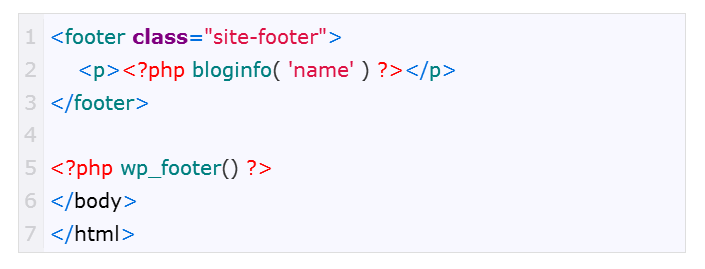
Step vi: Create the functions.php folder
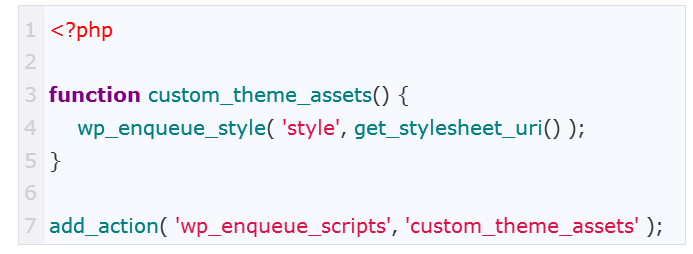
At this stage, the custom theme has four file folders: alphabetize.php, manner.css, header.php, and footer.php. The next file you should write is functions.php, which gives WordPress personality past assuasive the command-line to alter the CMS's default behavior. The post-obit are its characteristics:
- does not crave a unique header text; only works when the theme is active;
- applies only to the current theme;
This code will include or actuate the stylesheet for your custom theme:
Wrapping It Up
Information technology'southward finished! Your theme was constructed and the links that send the visitor to an exclusive page for each article operate well. In addition, you've already included your custom theme's header, footer, and CSS.
You learned the fundamentals of creating a WordPress theme in this lesson. Because website appearance is vital, especially for concern applications, you may use Bootstrap to add together lines of ready-made template scripts to your page, making it easier to add new features and functionality. Let usa know how you get on with this one!


How To Make Your Own Wordpress Template,
Source: https://wplift.com/how-to-make-a-wordpress-theme
Posted by: andersonvearguat.blogspot.com
0 Response to "How To Make Your Own Wordpress Template"
Post a Comment